
By Rabecca Mumba
The Netball Association of Malawi (NAM) says the Malawi Queens’ performance at the 2026 Commonwealth Games is part of a rebuilding process as the team continues to integrate new players while adapting to the demands of international netball.
The Queens have recorded one win from three matches at the Games, suffering heavy defeats to South Africa and England.
In an interview with Malawi News Agency (MANA) on Wednessday, NAM General Secretary Yamikani Kauma said the results should be understood within the context of competing against some of the world’s strongest netball nations.
 “The Commonwealth Games bring together the world’s strongest netball nations, where the margin for error is extremely small. While the results have not been what we had hoped for, we are in a rebuilding phase, integrating new players with experienced athletes while adapting to evolving international standards,” said Kauma.
She said countries such as South Africa and England have an advantage due to greater player depth, regular exposure to elite competitions and well-established high-performance systems.
“Our opponents have benefited from greater depth, consistent exposure to elite competitions and well-established high-performance systems.
Despite the results, the players have shown commitment and resilience, and we remain confident that the experience gained from this tournament will contribute positively to their development,” she said.
Kauma said it would be unfair to blame the team’s performance solely on expatriate coach Debbie Fuller or the players, arguing that sustainable success requires strong systems developed over time.
“It would be unfair to attribute the results solely to coaching or the players. Coach Debbie Fuller has brought valuable technical expertise and has made a positive contribution to our high-performance programme. However, sustainable success is built on strong systems developed over many years,” she said.
She identified limited international exposure, inadequate high-performance infrastructure and resource constraints as some of the broader challenges affecting the team’s competitiveness.
Kauma said South Africa and England exposed some areas that require improvement, including ball retention, transition play and consistency throughout matches.
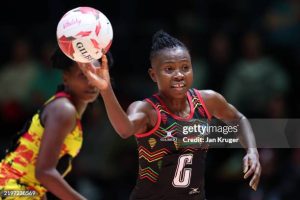
“South Africa and England demonstrated exceptional speed, physicality and tactical discipline. They applied relentless defensive pressure, disrupted our attacking rhythm and capitalised on turnovers. We also struggled at times with ball retention, transition play and maintaining consistency throughout all four quarters,” she said.
Looking ahead, Kauma said NAM will focus on strengthening the country’s netball development pathway through investment in grassroots programmes, youth competitions, talent identification, coach education, sports science and athlete welfare.
“Our focus will be on strengthening the entire netball ecosystem. This includes enhancing grassroots development, improving coach and umpire education, expanding high-performance programmes, increasing opportunities for international competition, and investing in sports science and athlete welfare,” she said.
She added that partnerships with government, corporate sponsors and development partners will be important in providing resources needed to build a competitive national team.
“We recognise the importance of sustainable partnerships with government, corporate sponsors and development partners to provide the resources required for long-term success,” said Kauma.
