
By Dr Charles Leyman Kachitsa
The most difficult questions are the difficult questions of nature. Often especially when you are young there are those questions that go beyond any living things and I remember that the advice by elders then is always to abandon such questions. These have no answers as they go beyond the human being. Of course it is until you are enlightened to know that there is a power above which is beyond all powers.
The understanding of creation and how being came into being is fundamental to progress from where humanity has come from and where we are at in our present generation. Misunderstandings, current misunderstandings most often have arisen as competition have intensified as to who have more knowledge on what has been and what sustains life. The source of all has always been one from which we all draw our life.
The aforesaid means that to understand the questions that are considered beyond the human being, one needs to have faith in gaining knowledge and knowing the source of all more deeper. We all individually as human beings have the chance to acquire the knowledge of being in understanding the creator, after all, as stated before all things have one and only one source.
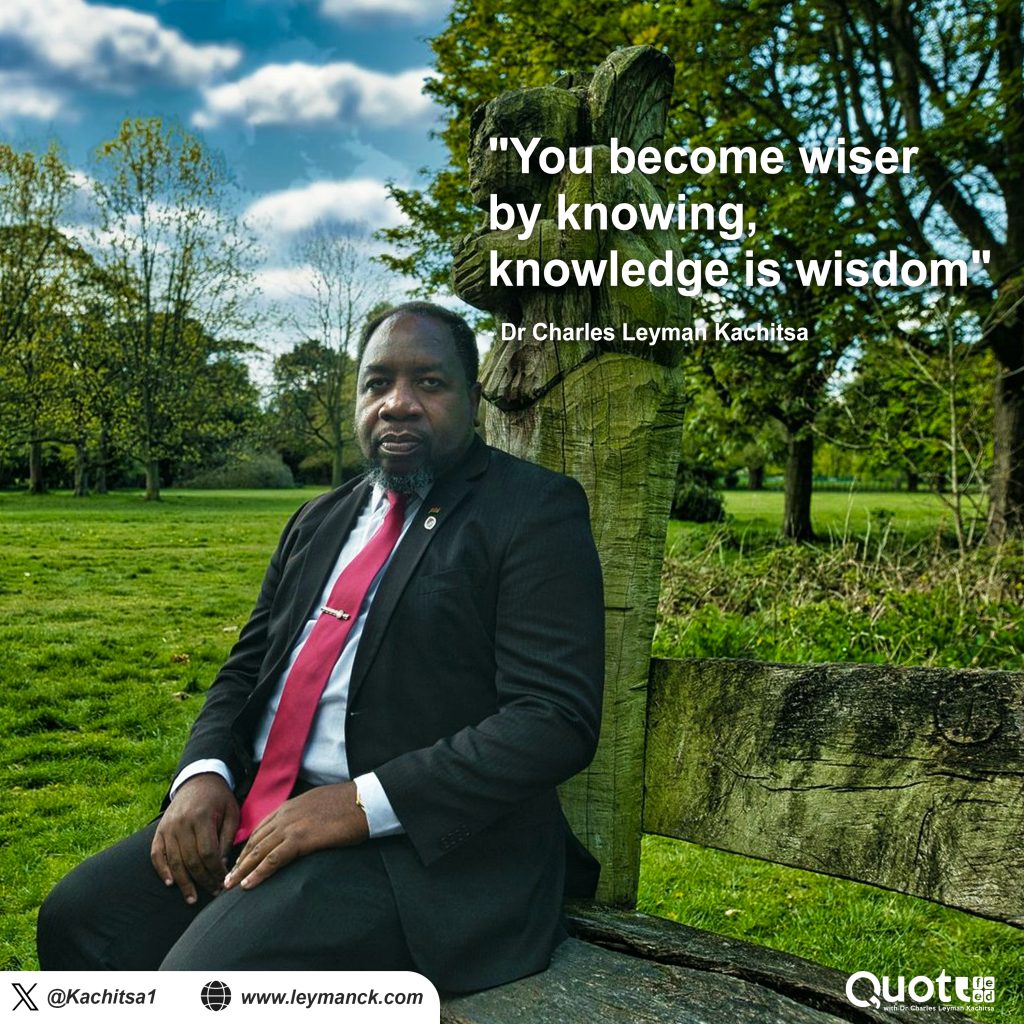
The quotes this week are from a book which narrows its narrative on the United Kingdom as to how its people relate to each other. This is a continuation in extracting knowledge from this book with the few selected quotations below that I am sure will enlighten you to one or two life lessons. Read and enjoy:
ETHNICITY, RACE AND INEQUALITY IN THE UK – STATE OF THE NATION by Bridget Byrne Et. al.
“…. So, although theoretically there is equitable access to mental health services, the experience and quality of those services is discriminatory. Further, fear of racism, which could lead to incorrect diagnoses or inappropriate compulsory treatment, may delay access, precipitating the involuntary admission feared in the first place. Health professionals for their part may stereotype or misunderstand symptoms. The Breaking the Circles of Fear report had picked up on this in 2002. ……”
“Long-term patterns of deindustrialisation and the move to a service-based economy have led to the offshoring of a substantial proportion of traditional manufacturing industry. There is a certain irony in the fact that while manufacturing jobs were moving from the UK in the global North to rising economies in the global South, the UK was experiencing waves of Commonwealth immigration in the opposite direction. Kalra (2000) notes how South Asian workers who came to Britain prior to the 1980s were employed in industries which were in long-term decline, and how the employment of men from this group was a journey from ‘textile mills to taxi ranks’. …….”
“…. As stated, cultural representations matter because they influence how we see and understand ourselves and the world, and how social understandings are formed. Cultural representation is, therefore, a powerful social force that shapes civil society, its politics and discourses. This is especially pertinent when it comes to race and ethnicity because of the history of cultural representations of racial and ethnic populations that have depended on racialised tropes and stereotypes. …….”
“Ethnic and racial inequalities in education in Britain should be situated within broader debates and policies around the expansion of education to all children to the postwar period. These debates have focused on the inequalities between private and state education systems and, from the 1960s, on the educational divide between grammar and secondary modern schools, with many concerned that the bipartite, selective system of education had led to ‘two nations in education’ (Mays, 1962, cited in Tomlinson, 2014: 18), entrenching social divides on family and class. ……”
