By Wendy Mkandawire
The Catholic Health Commission (CHC), an implementing partner in the Green Climate Fund-supported climate resilient Health and Well-being for Rural Communities (CHWBRC) project, has developed an Integrated Homestead Farming (IHF) Implementation Strategy.
Speaking during the workshops, the Malawi Conference of Catholic Bishops, Director of Social Development, Reverend Father Patrick Kamba, said Integrated Homestead Farming offers a sustainable way to improve household food security, nutrition, and resilience to climate change.
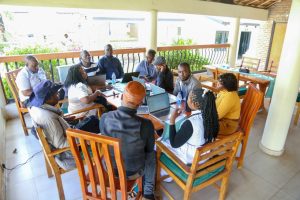 He further said that the main purpose of the project is to respond to health issues that are arise because of the impact of climate change.
” We want to engage various stakeholders particular who are run on the ground to come up with homestead solution so that we respond to specific health related issues that are induced by climate change”, he added.
Assistant Director for Horticulture in the Department of Crop Development, Matias Nkhoma, said the focus is on improving household nutrition.
“The integrated homestead farming model includes livestock, fruits, vegetables and fisheries. This makes it possible for households to access diverse food groups without having to purchase everything,” Nkhoma said.
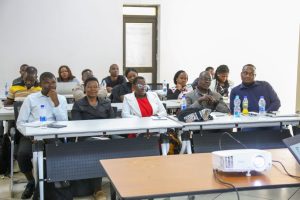 During the workshop Participants included representatives from Save the Children International, the project’s technical lead, the Creative Centre for Community Mobilization (CRECCOM), government ministries and departments, and other partners.
The workshops aimed to validate and agree on the implementation framework for the IHF approach.
The strategy is informed by assessments conducted in Balaka, Machinga and Phalombe, and it was finalized following two stakeholder validation workshops held from 8–10 July in Balaka and 13–15 July in Machinga
The findings show that most communities are ready to adopt the approach, but highlighted the need for greater investment in water harvesting, irrigation, agricultural inputs, and extension services.