
By George Bulombola
United Nations Educational, Scientific and Cultural Organisation (UNESCO) has called for the promotion of traditional games and sports to prevent them from becoming extinct and to integrate them into education, entertainment, and child and mental development.
Senior Assistant Executive Secretary for Malawi National Commission for UNESCO, Christopher Magomero, made the remarks on Wednesday in Mzuzu when he opened a workshop on “Safeguarding Games and Sports in Malawi Through Formal and Non-Formal Education.”
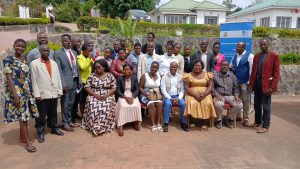
The workshop, supported by the UNESCO Intangible Cultural Heritage (ICH) Fund, brought together youth representatives, cultural heritage associations, and primary school teachers from the northern region.
“One of the aspects of the Convention on Safeguarding of ICH of 2003, is promoting preservation of ICH such as traditional games and sports through community-based surveys and documentation so that their relevance can be streamlined in various aspects of life and development.
 “About 32 traditional games across the country have been identified, with nine of them documented and we are developing their uniform and standard playing rules so that they become competitive, hence promoting their populace through practice and integrating them in our education system, hence this workshop,” said Magomero.
He added that a manual for the playing rules has been developed into a resource book for Physical Education and Expressive Arts in primary schools.
“By the end of this workshop, we expect to have teams which will be spearheading the promotion and playing of such games in both school and out of school and we plan to hold regional festivals on the same as a way of incentivizing stakeholders in this initiative,” he said.
Bonex Kasonga, a member of Mzimba Heritage Association, praised UNESCO for the initiative, saying it will spark youth interest in traditional games and promote cultural visibility.
“This initiative will bring free entertainment to our doorsteps and enhance unity, love and peace among communities,” he said.
Some of the identified traditional games include Msikwa, Fulaye, Nguli, Mbalika, Phada, and Ntchuwa.
