
By Maryam Ibrahim
The Governments of Malawi and Zambia have signed a food security agreement under which Zambia will supply 200 000 metric tonnes of maize to Malawi to help address looming food shortages affecting more than four million Malawians.
The signing ceremony was held on Wednesday afternoon at the Ministry of Agriculture Headquarters at Sunbird Capital Hotel in Lilongwe, where Malawis Minister of Agriculture, Irrigation and Water Development, Roza Fatch Mbilizi, and her Zambian counterpart, Rueben Mtolo, formally signed the agreement.
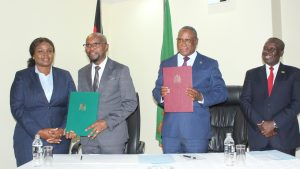 Speaking during the signing, Mbilizi said government research shows that more than four million Malawians are at risk of food shortages from October 2025 to March 2026 due to two consecutive poor farming seasons.
“Food insecurity remains one of our top priorities under the administration of His Excellency Professor Arthur Peter Mutharika. We are committed to ensuring that all Malawians have access to affordable food,” said Mbilizi.
She added that under the agreement, Malawi has purchased the maize at a cost of US$76 million, with deliveries from Chipata, Zambia, set to begin this October. The maize will be distributed across the country to ensure availability in all regions.
“This arrangement will help Malawians access maize at affordable prices and cushion the effects of the poor harvests we have experienced,” Mbilizi said.
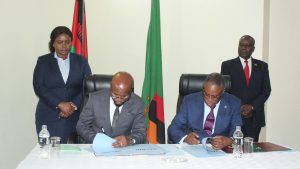 In his remarks, Zambian Minister of Agriculture, Mr. Rueben Mtolo, said his country was pleased to assist Malawi in ensuring sufficient food supply.
‘We are happy to support our neighbour during this challenging period. Zambia once faced similar drought conditions, and we understand how painful it is to see families struggling with hunger,” he said.
He further assured Malawians that the maize being supplied is of high quality and will be delivered on time.
“Any substandard grain will be replaced. We are committed to ensuring that Malawi receives only the best”, Mtolo said.
The agreement forms part of Malawis broader efforts to stabilise national grain reserves and strengthen regional cooperation in addressing food insecurity.
