
By Priscilla Phiri
In Zomba, keeping the city clean is no longer just the City Council’s concern but a shared responsibility that is born out of necessity.
What started as a Presidential directive, the National Clean Up Day, held every second Friday of the month, has grown into a fully fledged movement powered by residents who are stepping up to clean their streets, plant trees and restoring the glory that Zomba was known for in their locations.
What makes this movement even stronger is the genuine collaboration between residents and the City Council’s leadership.
Treasurer for Waste Management Committee for Likangala Ward, Rodrick Kamumtolo, recalls how managing waste was a challenge at Chikanda and other neighbouring villages.
“We used to struggle ourselves at household level. When the directive came, we realized that no one was coming to do it for us and we organised ourselves to put our ward in order.
“Today, Likangala Ward’s waste management committee conducts regular market clean ups; it monitors blocked drains; and it coordinates community wide cleaning days through our ward WhatsApp group,” he says.

Not only are the committees maintaining hygiene in the city, but they are also stepping their game higher by teaching fellow residents how to manage household waste; how to make compost organic fertilizer; and how to hold local businesses accountable to cleanliness standards.
“Our goal is to ensure that Zomba city remains clean and hygienic to prevent diseases and one of the notable achievements has been ensuring that every household has a waste bin.
“We have achieved this through sensitization; and we have also taught community members how to dispose their bins properly,” explains Kamumtolo.
The Malawi Local Government Association (MALGA) acknowledged the commendable work and named Likangala Ward Waste Management Committee the cleanest ward in Malawi recently.
Whilst the Waste Management Committee is making strides in keeping the ward clean, the Forest Committee for Likangala ward is leading with purpose, planting trees within the community and on the banks of the Likangala River.
Forest Committee Chairperson, Yowati Mlanga, oversees a tree nursery which started through a climate resilience project, but it is now managed by locals.
Today, the Committee has over 100 members who grow and provide seedlings to schools, homes, and riverside areas.
The members also generate income from the seedlings they grow as individuals, and they use the proceeds for school fees for their children, family support, and micro businesses.
“I earned K450,000 this year alone from my seedlings and that money has helped me pay fees for my children, and I used some money to venture into poultry,” he continues to explain.
The youth have also joined the committee, helping plant more trees and learning community mobilization skills first hand.
According to Yowati, the committee has also built its own welfare fund from the tree seedling proceeds to support members during illness or bereavement.
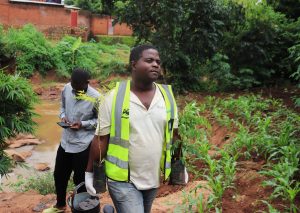
Recently, environmental enthusiast, Matthews Malata, emphasized the need for action as the country grapples with serious environmental challenges.
Malata said: “Tree planting is critical but protecting the trees planted is equally important. Educating and involving the community is crucial for safeguarding the trees planted.”
This transformation is not happening in isolation, according to Director of Health and Social Services for Zomba City Council, Busta Chiona.
The established waste management committees and community waste management by laws for every ward in the city to ensure sustainability of the initiative, and 70 percent of residents are now actively practicing reforestation.
These interventions have empowered communities to lead and hold themselves accountable.
“The committees are responsible for mobilizing the communities to implement proper waste management practices and initiatives such as the National Clean Up Day.
“We have seen better skip management, cleaner wards, and a deeper understanding of citizen responsibility in environmental conservation,” Chiona explains.
To bring the initiative to life, a City Task Force Team now coordinates stakeholders across the city, ensuring participation is embedded. And some wards have gone beyond the mandate, organizing frequent clean ups and environmental drives.
The real power of Zomba’s clean up revolution lies in its sustainability: The combination of local committee leadership, by-laws, and ongoing sensitization means communities are not just taking part, but they are leading and teaching each other, holding themselves accountable, and protecting shared spaces without being told to do so.
The current trend regarding environmental interventions in Zomba are just in line with the vision of the City’s Chief Executive Officer (CEO), Archangel Bakolo.
“I want the vision of a green and clean Zomba City to become a shared culture embraced by both council staff and residents,” says Bakolo.
To make the vision real, the Council has partnered with local universities and, together, they have launched Town Hall meetings, supporting environmental committees in the city.
These collaborations help close gaps between leadership and everyday citizens.
“My desire is that by the time I leave office, Zomba truly reflects that vibrant, sustainable identity of a place where green is not enforced but voluntarily chosen,” explains Bakolo.
Zomba’s ambitious clean and green city initiative aligns with the Malawi Vision 2063 development agenda which emphasizes environmental preservation for future generations.
