
By Alfred Banda
Government has emphasised the need to institutionalise employment impact assessments to ensure that major national investments generate meaningful job opportunities and contribute to sustainable economic growth.
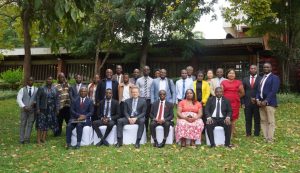
Labour Commissioner, Hlalerwayo Kelvin Nyangulu made the remarks Wednesday in Lilongwe during a validation workshop on the Employment Impact Assessment of the Bwanje Valley Irrigation Scheme (BVIS) held at Sunbird Capital Hotel.
“Employment impact assessments are studies that help us understand and quantify the employment effects of policies, programmes and investments,” said Nyangulu.
He said the government, through the Ministry of Labour, with technical support from the International Labour Organisation (ILO) and financial support from the European Union (EU), is working to institutionalise such assessments in Malawi.
According to Nyangulu, the initiative will help policymakers better understand how development projects influence job creation and guide decisions aimed at maximising employment opportunities.
 He said the initiative aligns with the Decent Work Agenda and the Sustainable Development Goals, particularly Goal Eight which focuses on decent work and inclusive economic growth.
Nyangulu added that the concept also supports Malawi’s long-term development blueprint, Malawi 2063, which places job creation at the centre of national transformation efforts.
He said agriculture and infrastructure development remain key drivers of employment under the Malawi 2063 agenda, noting that projects such as the Bwanje Valley Irrigation Scheme help commercialise farming and create opportunities in agribusiness and agro-processing.
ILO Technical Officer for Malawi, Patience Matandiko, said employment impact assessments help ensure that public investments translate into more and better jobs.
“Employment impact assessments support governments to create more jobs from public investments by generating evidence and insights that help identify options to maximise employment opportunities,” she said.
Matandiko added that Malawi is among countries implementing the Global Accelerator Initiative on Jobs and Social Protection aimed at strengthening employment creation and social protection strategies.
 Meanwhile, Malawi Congress of Trade Unions (MCTU) representative Jessie Ching’oma said the assessment confirms that agriculture remains one of the sectors with high potential to create decent jobs in Malawi.
She said irrigation initiatives such as the Bwanje Valley Irrigation Scheme support national efforts to expand employment opportunities while improving agricultural productivity and livelihoods.
The assessment found that the irrigation scheme, which covers about 800 hectares in Dedza District, has contributed to improved agricultural productivity and created thousands of jobs, although many remain seasonal and informal.
