
By Joel Phiri
Traditional leaders in Mzimba District have urged their subjects to embrace the EU-funded Ulimi ndi Chilengedwe (UCHI) project, despite the absence of financial incentives for participants.
In Mzimba, the project is being implemented in Watereka in Kazomba EPA and Kamwankhuku at Champhira.
The project, which also promotes nutrition, encourages communities to plant trees, practice sustainable farming, and stop cutting down existing trees—measures chiefs say are crucial to reversing years of environmental degradation.
Watereka and Kamwankhuku areas were chosen because they are hotspots of environmental degradation.
Speaking on Monday during a meeting at Watereka under Traditional Authority Mzikubola in Kazomba EPA, Group Village Head Aaron Mnyamazi Nkhata told the villagers of the consequences of neglecting the environment.
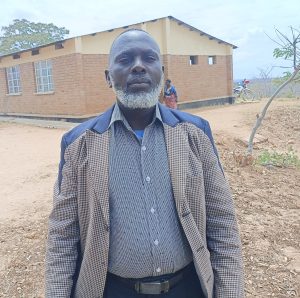
“In the past, our lands were fertile, water was plentiful, and boreholes never ran dry. Today, our forests are disappearing, water is scarce, and the soil has lost its fertility because of poor farming practices and tree cutting. I call on all my subjects to plant trees and adopt good farming practices for the sake of our children,” Nkhata said.
The chief stressed that the initiative is a long-term investment in the community’s future.
Mtangatanga Forest and other local woodlands have been severely degraded by illegal logging, charcoal burning, and unsustainable farming, contributing to faster-drying boreholes, reduced crop yields, and soil erosion.
Village Head James Mwale asked community members to embrace volunteerism and community responsibility.
“This is not about money; It is about ensuring that our land can feed us and provide water for future generations. Cutting trees may give short-term benefits, but it brings long-term harm. Planting trees now restores our forests, protects water sources, and improves soil fertility,” he said.
Community member Alison Kumwenda expressed hope that the project will address perennial under-harvesting and water scarcity.
“Every time we fail to harvest enough yields, water runoff is part of the problem. Water is a major challenge because of deforestation. Boreholes dry quickly. This project will support us to change that hence the need for us all to take part in this project,” he said.
The Ulimi ndi Chilengedwe project combines tree planting with nutrition and sustainable agriculture education, teaching villagers to rotate crops, use organic manure, and diversify production to improve soil health and household diets.
Senior Lands Resource Conservation Officer for Mzimba, Olive Nyalira noted that traditional leaders’ influence is key to community participation.
“Traditional leaders carry moral authority. When they take the lead, communities are more willing to engage. Their involvement is critical for restoring degraded forests and securing food and water for future generations,” Nyalira said.
She added that the project is establishing Catchment Management Committees to lead conservation work at the local level.
“Our presence here introduces the project and oversees the formation of these committees. We are happy that communities, having witnessed the negative impacts of environmental degradation, are now embracing efforts to reverse years of neglect,” Nyalira said.
