
By Innocent Manda
Malawi’s 2025 General Elections have attracted regional attention for their credibility, transparency, and careful integration of modern technology alongside traditional electoral processes.
The Malawi Electoral Commission (MEC) announced Professor Arthur Peter Mutharika of the Democratic Progressive Party (DPP) as the winner of the presidential contest, following thorough collation of votes nationwide.
“I, Justice Annabel Mtalimanja, with the powers vested in me, now pronounce Professor Arthur Peter Mutharika and Jane Ansah as the duly elected President and Vice President of the Republic of Malawi with 3,035.249 votes, representing 56.8 percent,” she stated.
MEC emphasized that all queries from political parties were resolved before the final declaration, ensuring that transparency and credibility were maintained throughout the electoral process.
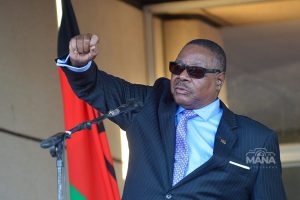
Outgoing President Lazarus Chakwera publicly conceded defeat, demonstrating a commitment to peaceful transition, and setting a precedent for democratic practice in Malawi and the wider SADC region.
Political analyst Chimwemwe Tsitsi praised Chakwera’s actions, noting the significance for national unity and democratic stability.
“This is a rare example of statesmanship that strengthens national unity and sets the right precedent for future leaders, helping to consolidate democratic gains made since the reintroduction of multiparty democracy,” Tsitsi said.
The analyst also called on the incoming government to maintain continuity in national development programs that support long-term growth and food security.
“There are some good developments such as Mega Farms, irrigation farming initiatives, road infrastructure, and many more programs, which we need as a country to sustain growth and enhance food security,” he stressed.
The President-elect Mutharika addressed the nation, expressing gratitude to Malawians for their support and acknowledging the peaceful role played by the outgoing administration.
“If we work together, we can build a brighter future for all Malawians,” he said, highlighting unity, economic revitalization, and social development as key priorities.
Mutharika cautioned against dubious financial dealings, emphasizing that irregular payments and suspect contracts undermine public trust in governance.
The Southern African Development Community (SADC) Electoral Observation Mission (SEOM) provided an assessment of Malawi’s political environment before, during, and after polling day.
“The political and security environment before, during, and immediately after polling day was calm,” said SEOM Head of Mission, Themba Nhlanganiso Masuku.
SEOM commended Malawians for patience during the announcement of final results and highlighted the orderly conduct of political parties and independent candidates.
“SEOM wishes to express its appreciation to the people of Malawi for their patience and calm as they waited for the announcement of the final results,” the Mission stated.
Justice Barnabas Nyamazawo, Head of the Electoral Commissions Forum of SADC (ECF-SADC), provided observations on MEC’s reforms and professionalism in managing the 2025 elections.
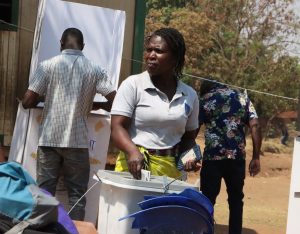
“Party monitors, observers, and voters were well accommodated. Counting and results management processes were orderly, with results forms duly signed, copies distributed to monitors, and posted at polling stations, reinforcing transparency and trust in the system,” noted Nyamazawo.
The ECF-SADC also encouraged legislative reforms to improve dispute resolution and called for distinctive regalia for election officials to strengthen accountability and visibility.
“The Forum commends Malawi for progress in electoral administration, but urges MEC to enhance civic education, address disinformation, and strengthen inclusivity, particularly for women and youth, in line with regional democratic aspirations,” he said.
The Africa Centre for Democracy (ACD) Observer Mission analyzed the role of media and civil society during the elections, noting both strengths and areas for improvement.
“The Mission acknowledges Malawi’s vibrant media, but the concerns over unequal airtime for political parties, particularly on state-owned broadcasters, must be addressed to strengthen fairness, balance, and credibility in electoral communication processes,” said Lindiwe Zulu who headed the Mission.
She highlighted the crucial contribution of civil society organizations in reaching underserved communities and ensuring inclusivity during voter education and monitoring.
“Civil society groups demonstrated remarkable resilience and professionalism. Their role in promoting democratic accountability, empowering marginalized voices, and coordinating effectively through the Situation Room was highly commendable,” stressed Zulu.
The SADC Mission also observed the underrepresentation of women in the electoral process, despite women making up 57 percent of registered voters.
“The proportion of women in elected offices remains very low and is a cause for serious concern. On a positive note, nine women were chosen as running mates to the presidential candidates,” said Masuku.
Observers recommended measures to increase female participation, including reduced nomination fees and targeted voting interventions to promote inclusivity in line with SADC Protocol commitments.
European Union (EU) Election Observation Mission noted that while campaigning was competitive, inequities existed due to inadequate campaign finance regulations and disproportionate access to state resources.
Voting on election day, however, was largely peaceful, orderly, and transparent, with party representatives present in nearly all polling stations as observed by EU monitors.
EU observers recognized the introduction of Smartmatic technology as a complement to traditional paper-based processes, enhancing verification while maintaining transparency and stakeholder confidence.
The biometric voter verification devices and electronic management systems facilitated timely aggregation of results while allowing independent validation through paper trail copies at polling stations.
Observers emphasized that counting and transmission of results required improvements, but the combination of technology and traditional oversight reinforced public trust in the outcome.
President-elect Mutharika acknowledged the role of technology, media, and civil society in promoting a credible and transparent process, emphasizing that governance must now focus on national development and accountability.
Regional leaders, including King Mswati III of the Kingdom of Eswatini – In-coming Chairperson of the SADC Organ on Politics, Defense and Security Cooperation – also commended Malawi’s process.
King Mswati III noted the country’s adherence to electoral laws and democratic values, praising citizens for patience during the vote tallying.
“SEOM wishes to express its appreciation to the people of Malawi for their patience and calm as they waited for the announcement of the final results,” reads part of the statement issued by King Mswati III.
Political analysts highlighted that Malawi’s elections provide a benchmark for other SADC countries, demonstrating how technology can be blended with traditional electoral practices while maintaining inclusivity and transparency.
The integration of Smartmatic technology with conventional procedures, including paper verification and stakeholder oversight, represents a significant step for SADC nations seeking credible and modernized electoral systems.
As Malawi embarks on the next administration under Professor Mutharika, observers across the SADC region agree that maintaining transparency, civic engagement, and inclusivity will be critical to sustaining democratic resilience and public trust.
