
By: Aisha Chiwaya & Max Medson
In Salima District, the quest for gender equality in political leadership remains an uphill struggle. Despite commendable efforts by organizations such as the Women’s Legal Resource Centre (WOLREC), National Initiative for Civic Education (NICE), and Oxfam to promote equal representation through campaigns and capacity-building, women continue to lag behind in political participation.
Out of 36 candidates vying for parliamentary seats in Salima, only six are women, representing 17 percent. At the local government level, 16 women are contesting as ward councillors out of 59 aspirants, translating to 27 percent.
Observers point to several barriers limiting women’s political participation, key among them being lack of financial support.
According to advocates, having the desire to contest is not enough without the resources to mount a competitive campaign. The much-publicized 50/50 campaign championed by WOLREC and Oxfam has so far only reached seven out of Malawi’s 24 districts, highlighting the urgent need to expand such initiatives nationally.
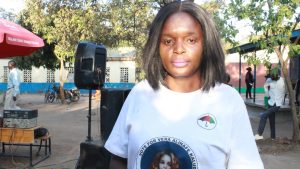
Salima District Gender Officer, Friness Samaliya, says cultural and religious beliefs remain a stumbling block.
“Salima is deeply rooted in culture and religion, and being a Muslim-dominated area, many traditions discourage women from taking up leadership roles. This remains a major challenge,” she said.
Yet, despite these barriers, some women are challenging the status quo. Vera Kaludzu, an independent ward councilor for Salima Central Constituency, believes stereotypes are slowly fading.
“Yes, there has been a slight improvement in how people view us. They now accept that women can compete and take leadership roles. But the problem is we are often left on our own, with little support, sometimes even from our own families,” Kaludzu explained.
While Kaludzu blames stereotypes, fellow aspirant Janet Chipeni, contesting under the United Transformative Movement (UTM) ticket, points to the culture of handouts as a serious obstacle.
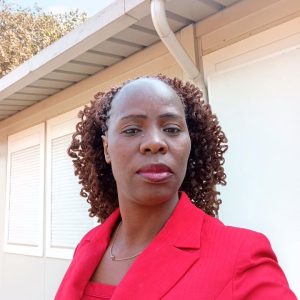
“The persistent expectation of handouts from voters is a huge challenge, especially in these tough economic times. Unlike men, very few of our friends have the capacity to lend us money for campaigns,” she said.
Executive Director for WOLREC, Maggie Kathewera Banda, said that although the Malawi Electoral Commission (MEC) has introduced reduced nomination fees for female and special needs candidates where men pay K2.5 million for parliamentary seats against K1.25 million for women, and K200, 000 for male councillors compared to K100, 000 for women, many women still struggle to finance their campaigns.
Statistics show that out of 57 women who initially expressed interest in contesting, only 27 have remained in the race.
To address this, Banda proposes full implementation of the Women’s Strategy of 2024.
“There is need to strengthen women’s forums at grassroots level to identify and nurture potential female leaders. We should focus on basic literacy and empowerment rather than only high educational qualifications, so that more women can take part in leadership positions,” she suggested.
Despite the challenges, the determination of organizations like WOLREC and their partners continues to inspire hope.
With sustained advocacy and empowerment efforts, the fight for gender equality in political leadership in Salima and across Malawi is set to gain momentum in the years ahead.
