
By Brenda Nkosi
Like in many districts, it is an achievement for a girl living in a remote area in Mangochi to get selected to a secondary school.
In the year 2023/2024, out of the 120 learners, 47 boys and 73 girls, who sat for the Primary School Leaving Certificate of Education (PSLCE) at Malembo Primary School in Mangochi, 117 learners, 47 boys and 70 girls, passed representing 98 percent pass rate.
Sixteen-year-old Anne Funiwelo of Chilimba Village in Traditional Authority Mkumba felt like a superstar when her name was among the girls who were offered a place at Nchema Secondary School.
Despite Nchema Secondary School being a bit far away from her village, Anne braves the distance with strength.
“I walk to school every day for over an hour because this is a walk to my future, a good future,” says Anne confidently.
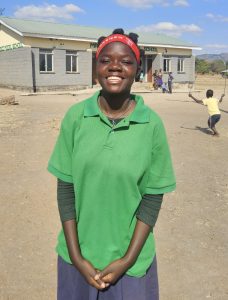
However, she has come to realize that the walk is not enough for her to make it.
“My mother and father separated when I was young. I don’t know where my father is, and my mother has been struggling since I was a young child to provide for my needs. The situation worsened due to El Nino as we were not able to harvest from our farm,” she says.
She has had to miss classes because of school fees, which is K30 thousand (17 USD) per term.
“Most of the time, I don’t attend classes because I am sent away from school until I settle my school fees balance and this has negatively affected my performance in secondary school.
“For instance, last term I performed poorly because I did not attend classes. For me to write my Junior Certificate Examination (JCE), my mother had to sell some of the household property,” explains Anne, wearing an expression of hopelessness on her face.
As such, Anne struggles a lot with the emotional stress of having an absent father, seeing her mother struggle, and not attending lessons.
“I love coming to the children’s corner in my area to socialize and forget my problems,” she sighs with relief.
Malembo Children’s Corner in Traditional Authority Nankumba in Mangochi is one of the 141 centres established by the Ministry of Gender, Children, Disability and Social Welfare in 2013 with support from Unicef.
A Child Protection Worker at Malembo Children’s Corner, Jacklyne Beluti, says these centres were established to provide a platform where children from six to 18 years old can come together.
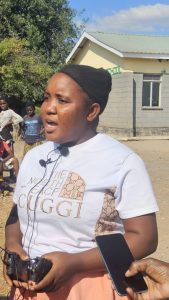
“These centers aim to bring children together as a socializing platform where they play games and they are made aware of their human and child rights. In doing so, they are empowered, which reduces the risks of violence, abuse, exploitation, and neglect within the community,” she says.
Beluti says by creating a rapport with social workers, children feel safe, and they are encouraged in their education. They are also encouraged to report any form of abuse.
“Children who patronize the centers grow up concentrating on important things like education. This also allows us to screen children who have been experiencing issues of violence, abuse, and exploitation.
“Additionally, those who patronize the centers know their rights and they can recognize a violation if they are being abused,” explains Beluti.
The Child Protection Worker highlights the common challenges the children experience in her community as a lack of school fees and long distances to school.
“We always encourage children here not to give up on their future because of a lack of school fees or the distance to school. As they interact, they are comforted to realize that their peers are going through almost similar challenges but they have not given up,” she says.
Senior Social Welfare Assistant for Mangochi District Council, Samuel Chitseko, says the period from January to June 2025, they have recorded 856 cases of child protection.
“The common cases of child protection in Mangochi are limited access to education, poverty, and cultural norms and beliefs that promote child marriages. We also have issues of child labour in the fishing areas and also by business persons,” he explains.
Chitseko adds that in most communities, there is an education barrier as most children walk long distances to access education.
In the 2023/24 growing season, Malawi was significantly impacted by the El Niño weather pattern, triggering widespread climatic shocks, including dry spells and localized flooding.
These events led to extensive crop failure and severe food insecurity across the country, especially in the Southern and Eastern regions.
Between October 2024 and March 2025, over 5.7 million people were in need of humanitarian assistance.
Economic instability, inflation, and rising food prices further deepened household vulnerability, pushing malnutrition and protection concerns to alarming levels.
On 23 March 2024, President Lazarus Chakwera declared a State of Disaster across 23 of the country’s 28 districts.

There was a 50 percent rise in child protection violations between 2023 and 2024, as reported by the Ministry of Gender, Children, Disability and Social Welfare, while the Malawi Police Service reported escalating Gender Based Violence (GBV) incidents in affected districts.
In response, UNICEF Malawi, with funding from the European Civil Protection and Humanitarian Aid Operations (ECHO), rolled out an integrated emergency project focusing on nutrition, health, and child protection in 10 of the most affected districts: Nsanje, Chikwawa, Balaka, Machinga, Mangochi, Phalombe, Mulanje, Chiradzulu, Zomba, and Salima.
According to Child Protection Officer for Unicef, Martin Nkuna, Unicef has been implementing a project called Strengthening Integrated Emergency Response for Nutrition, Health, and Child Protection in El Niño-Affected Districts in Malawi since 2024.
“Through the project, we are working with the Social Welfare Office in mental health and psychosocial support (MHPSS) and Gender-based violence (GBV) prevention and response, which is being achieved through the children’s centers, among others.”
He says over 20,000 caregivers and frontline workers were reached with psychosocial support and GBV response services.
Just like Anne, many children have been left to bear the consequences of El Nino, making the walk to their future almost impossible.
