
By Dr Charles Leyman Kachitsa
Growing up I watched my dad also growing. Who was watching who, is a big question. It is safe to say I was watching him grow and he was watching me grow, which make the two of us witnesses of the thing called life. As the years went by, there was a time that I started becoming worried, worried as his hair was receding backwards by each day. But that was not the biggest worry, the bigger worry was seeing a growing patch in the middle of his head. Again that was not a massive worry, the big worry was I saw myself on to the future at the same age he was and realised this was the fact awaiting me.
Now I am grown up and I am about the same age my father was when as a boy I saw a bald patch on the middle of his head that worried me. Looking back I may have missed the occasion. I have a similar bald patch on the middle of my head similar to my father’s which I carry proudly wherever I go. It makes me feel complete, complete that I am my father’s son and that we share the same blood. I missed the occasion for I should have asked him how he felt and perhaps I could have then understood my worry much more sensibly.
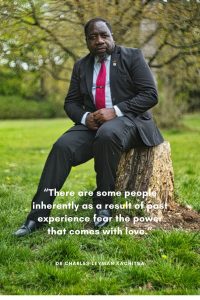 Life is beautiful for we are all on a journey. Some people understand the journey, yet others do not. There is a bigger section that has no sense and knowledge that this is a journey marked by familiar stages which all have to go through. Despite the differences in length of time for the journey, no one born, would ever miss the last step that awaits everyone which is the completion of the journey. Experiences may be different but it is the same familiar path each has to take to the finishing line. Life is sweet!
The quotes this week are a continuation extraction from a book that in keeping with the spirit of the month, May as a period of recalling the contributions and journeys of African people. It narrates the experience of women in one of the regions where emancipation became an important word. I am sure the selected few quotations listed below will enlighten you to one or two life lessons, read and enjoy:
THE WOMEN OF RENDEZVOUS by Jenny Shaw
“When the ‘great and numerous family’ arrived in England, the capital’s hierarchies made clear that the markers that had dictated the women’s status in Barbados – their sex and their race – were just as developed in the metropole. While the identifiers of enslavement might have looked different in each place – for example, elaborate neck collars were not part of the uniform of bondage in Barbados, while coarse osnaburg clothing was not common in England-the idea that Blackness connoted inferiority was active on both sides of the Atlantic Ocean. Although England might have offered the suggestion of a world beyond bondage, on the Streatham estate, at least two of its Black inhabitants likely found themselves in much the same circumstances as they had in Barbados. And all around them were reminders that Black people in England were as likely to be enslaved as to be free.”
“Although she never argued for her right to freedom explicitly, Elizabeth did so implicitly in every action she took. Like other Black mothers, she drew on her kinship ties-to John, and more importantly to her children-to cement her unbonded status. And like so many women of color, her defiance was, ultimately, a solo crusade. Her refusal to accept anything less than what she had been promised is no less radical for that. In Elizabeth we see another example of the ways that individual Black women understood their value in the early modern Atlantic world. She deployed that knowledge over four decades to turn what had once been an assessment of her worth as property into a demand for her right to such property herself.”
“Given that their futures might well have resided on his deathbed decisions, it would be more surprising if the women had not tried to sway the man who fathered their children. After all, they had been in his households-on both sides of the Atlantic Ocean-for almost twenty years and knew the man, and his foibles, intimately. They could have expressed their wishes and desires subtly: they were all well placed to offer modest daily reminders of their roles, and of the need to provide for their children upon his death. That alone might have been sufficient. Equally, they could have acted more as Robert suggested, deliberately raising questions with John about inheritance and where they and their children would live in the event of his death. That they probably did so is a demonstration of their understandings of their value to John and to his estate.”
“While England had strong prescriptions against bigamy, this did not prevent men from impregnating women who were not their wives. Among the highest echelons of English society illegitimate children marked marked a man’s virility. Although Charles II and Catherine de Braganza, queen consort, did not have children together, he infamously fathered around a dozen offspring with numerous mistresses, each of whom he recognized and ennobled. Wives whether queen consorts or mere mistresses of the household, had these children thrust under their noses. Often, they were forced to accept their inclusion in their families, however much they may have wished to feign ignorance of their existence.”
