By Wendy Mkandawire
The Ministry of Health has urged Malawians to take personal responsibility for their health by seeking regular medical check-ups, amid revelations that Non-Communicable Diseases (NCDs) account for an estimated 40 percent of deaths in the country.
 The call was made by Principal Secretary in the Ministry of Health, Benson Chisamile, during the commemoration of World Patient Safety Day held in Lilongwe on Wednesday.
Chisamile said it is critical for patients to seek proper diagnosis in health facilities and to receive appropriate treatment and medication.
“Patient safety is not a one-time intervention. We must ensure that every patient who comes to the hospital gets proper diagnosis, treatment and medication,” he said.
This year’s World Patient Safety Day was commemorated under the theme “Safe Care for Non-Communicable Diseases” with the slogan “Safe Care for Life,” a reminder that patient safety must be continuous.
Chisamile said the Ministry remains committed to preventing NCDs and improving the quality and safety of healthcare in Malawi.
He urged Malawians to undergo regular screening for hypertension, diabetes and cancer, and to avoid tobacco use and excessive alcohol consumption, which are major risk factors for NCDs.
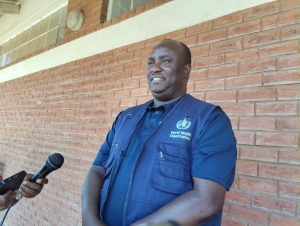 In his remarks, World Health Organization (WHO) Representative to Malawi, Dr. Charles Njunguna, said patient safety is one of the most important dimensions of quality healthcare and is fundamental to achieving Universal Health Coverage.
Njunguna disclosed that WHO estimates approximately 134 million adverse events occur annually in low- and middle-income countries, contributing to 2.6 million deaths every year.
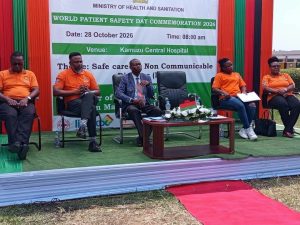 He emphasized that this year’s World Patient Safety Day goals highlight the need to partner with people living with NCDs, caregivers and civil society organizations in designing, monitoring and improving health services.
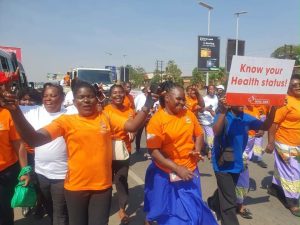 “WHO remains committed to supporting the Government of Malawi and all stakeholders in strengthening patient safety systems, improving quality of care, building health worker capacity, promoting patient engagement and advancing Universal Health Coverage,” Njunguna said.